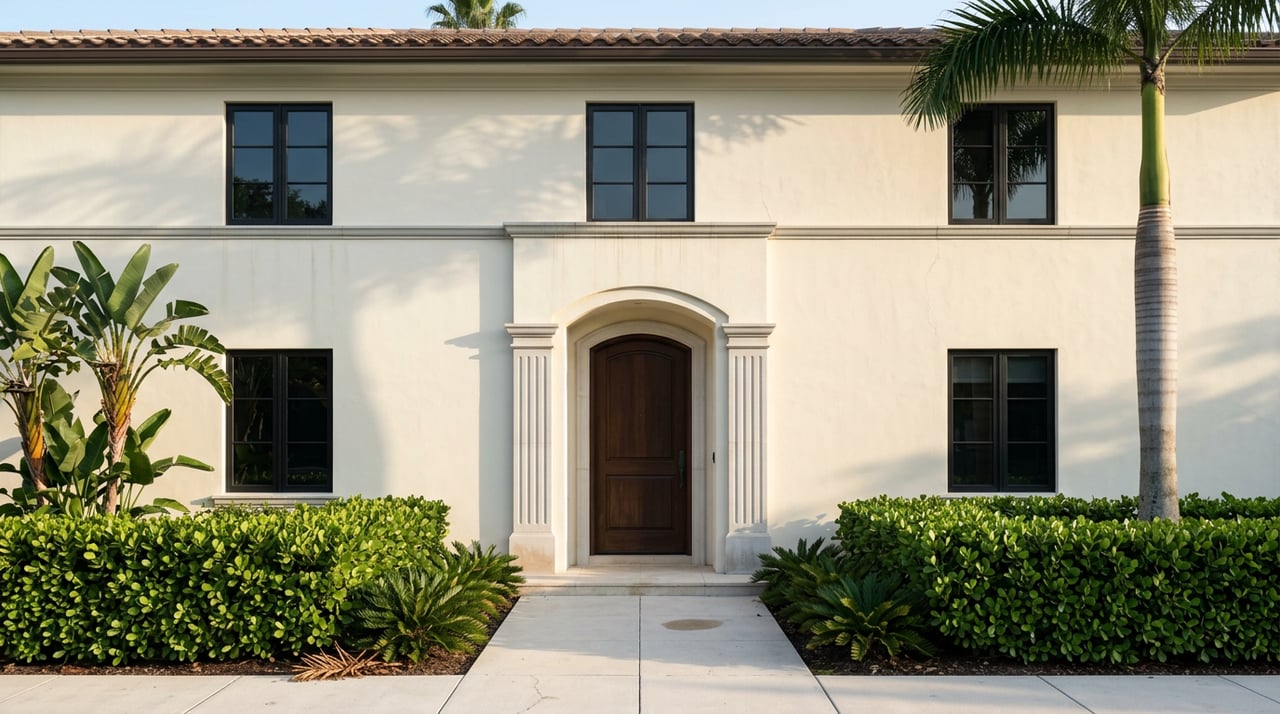
As of April 2026, more than a year after Damac International began marketing a 15-story tower called The Delmore on the exact footprint where Champlain Towers South once stood at 8777 Collins Avenue, not one of its 37 units had a signed contract. The building has clean paperwork. It is new construction, with none of the deferred maintenance or reserve shortfalls that forced Florida's post-2021 condo reforms in the first place. The developer's senior vice president of development, Jeffrey Rossely, told Bisnow that buyers kept saying the same thing: they did not want to be the first purchaser at that address.
A few blocks inland, single-family homes in Surfside kept changing hands the way they always have, slowly, at prices that hold, without a hint of the same hesitation. That gap is the story. It is not condos versus houses. It is documentation versus memory, and neither one behaves the way most people assume.
Three markets, one town
Ask most buyers what "the Surfside market" means and you get one answer: risk, tied to the 2021 collapse. That answer is too flat to be useful. Since the reforms took hold, the town has effectively split into three distinct pricing environments that a buyer or seller needs to treat separately.
The first is single-family homes, which carry no association, no reserve fund, and none of the structural-disclosure requirements now attached to condo ownership. The second is older resale condo buildings, where value increasingly tracks a building's Structural Integrity Reserve Study and inspection history rather than its finishes or its view. The third is new construction built on or near ground with a public history, where even a spotless engineering report has not been enough to overcome what buyers associate with the address.
Treating these as one market, or even as a simple two-way split between houses and condos, misprices all three.
What the five-year numbers actually show
Statewide, comparing sales in the five years since the June 2021 collapse, condo and townhome transactions dropped about 48 percent while single-family home sales fell only about 20 percent over the same stretch, according to Florida Realtors data reported by the Miami Herald in a June 2026 retrospective. That gap alone explains why houses have felt calmer than condos through this period. Fewer transactions were lost.
The more interesting number sits inside the condo figure. Active condo listings statewide have climbed more than 250 percent since the collapse, yet the median sales price for condos that actually close has risen roughly 23 percent over the same window, landing around $307,000 as of that same June 2026 reporting. Listings are piling up while the ones that sell are getting more expensive. That is not a market falling apart. It is a market where the units with clean paperwork keep trading at a premium while everything else sits, which is exactly the behavior you would expect once documentation, not condition or comps, became the thing buyers price first.
The paperwork economy
Florida's Senate Bill 4-D, passed in a 2022 special session after the collapse, ended the practice of condo boards voting to waive reserve funding for structural items. Buildings three stories or taller now have to complete milestone structural inspections and keep fully funded reserves for the eight components the law covers, from roofs to load-bearing walls to waterproofing. Governor Ron DeSantis signed a further update to the law in the summer of 2025 that gave some associations more ways to fund those reserves, including loans and lines of credit, and extended certain structural-study deadlines, but it did not remove the underlying obligation to fund the work.
The deadlines are not abstract. A Florida legislative watchdog report released August 1, 2026 flagged 2,535 condo and co-op buildings statewide for deeper Phase 2 inspections across 2024 and 2025, with 54 declared unsafe or uninhabitable. For a large share of buildings still working through this process, the milestone deadline lands December 31, 2026, and missing it can trigger fines of $500 a day along with code referrals or vacate orders.
Miami-Dade County had its own recertification framework long before the state stepped in. The county has required inspections for buildings over 2,000 square feet since 1975, after a different building partially collapsed the year before, killing seven people. That local rule predates SB 4-D by nearly five decades and still runs alongside it, which is one more reason a condo buyer here has to ask about two overlapping inspection calendars, not one.
None of this touches a single-family home. A house has no board, no reserve study, no milestone deadline. That structural difference, more than any sentiment about the neighborhood, is why the two property types have priced so differently since 2021.
Why documentation didn't save the address
If the story were purely about paperwork, The Delmore should have sold out. It is brand new. It carries none of the deferred-maintenance history the reforms were built to catch. Instead, its sales team described a buyer pool that stayed away for reasons the reserve study can't fix.
"A lot of people did not want to be the first purchaser."
That single sentence separates the two forces at work in Surfside's condo segment right now. One is financial and measurable: reserve funding, inspection status, insurance cost. The other is reputational and much harder to underwrite: what an address means to a buyer regardless of what the engineering says. A building can clear every statutory requirement and still carry a discount that has nothing to do with its balance sheet.
What this actually means depending on what you're buying
- If you're looking at a house, the association risk that dominates condo headlines simply doesn't apply to you. Your diligence is closer to a conventional home purchase, though Surfside's low turnover means expect a longer search and less room to negotiate on well-priced listings.
- If you're looking at a resale condo, ask for the building's most recent SIRS report, its milestone inspection status, and whether any reserve items are being funded through a loan rather than cash. A loan against future assessments can look like financial health on paper while quietly obligating owners to years of higher dues.
- If you're looking at new construction on or near a site with a public history, price in the possibility that a clean report will not be enough on its own. Marketing timelines here have run longer than developers expected, and that lag is now part of the risk profile whether or not the building's paperwork says otherwise.
A short FAQ
Does a house in Surfside carry any of the condo reform risk? No. Milestone inspections, SIRS requirements, and reserve funding rules apply to condo and cooperative buildings three stories or taller. A single-family home has no association and none of these obligations attach to it.
What should I actually ask for before making an offer on a resale condo here? Request the building's most recent SIRS report, the last board meeting minutes, and confirmation of whether the association's reserve funding comes from cash, a loan, or a pending special assessment. The answer changes what your real carrying cost looks like well beyond the listed monthly dues.
Is new construction automatically a safer bet than an older building? It solves the structural documentation problem, since a new building has no deferred maintenance to catch up on. It does not automatically solve the reputational one, as the marketing timeline on the site of the former Champlain Towers South has shown.
What's the deadline I should be tracking if I'm buying an older condo? For many buildings statewide, the milestone inspection deadline is December 31, 2026. Ask where the specific building stands in that process before you go under contract, not after.
Surfside rewards buyers and sellers who stop asking whether the town is safe and start asking which of its three markets they're actually standing in. If you're weighing a house against a condo here, or trying to understand what a specific building's paperwork really says about its price, Eric Rosado can walk through the documentation with you before you write an offer, not after.