If you are drawn to Surfside for the ocean views, walkable setting, and polished condo lifestyle, it is worth looking beyond the balcony. In this small oceanfront town, the building itself often shapes your ownership experience just as much as the location. When you understand how amenities, reserves, inspections, insurance, and association records fit together, you can make a more confident decision. Let’s dive in.
Why Surfside Stands Out
Surfside is a compact barrier-island town between Miami Beach and Bal Harbour with nearly 6,000 residents, a mile of public beach, and a residential mix that includes condominium and apartment buildings. The town also describes itself as pedestrian-friendly, which adds to the appeal for buyers who want an oceanfront setting with a more contained feel.
For you as a buyer, that setting creates a specific kind of condo market. Surfside oceanfront living is not only about beach access. It is also about how each building is run, maintained, and funded over time.
What Oceanfront Condo Living Looks Like
Surfside oceanfront condos can feel very different from one building to the next. Some offer a boutique, highly private atmosphere, while others are more service-oriented and operate with a hospitality feel.
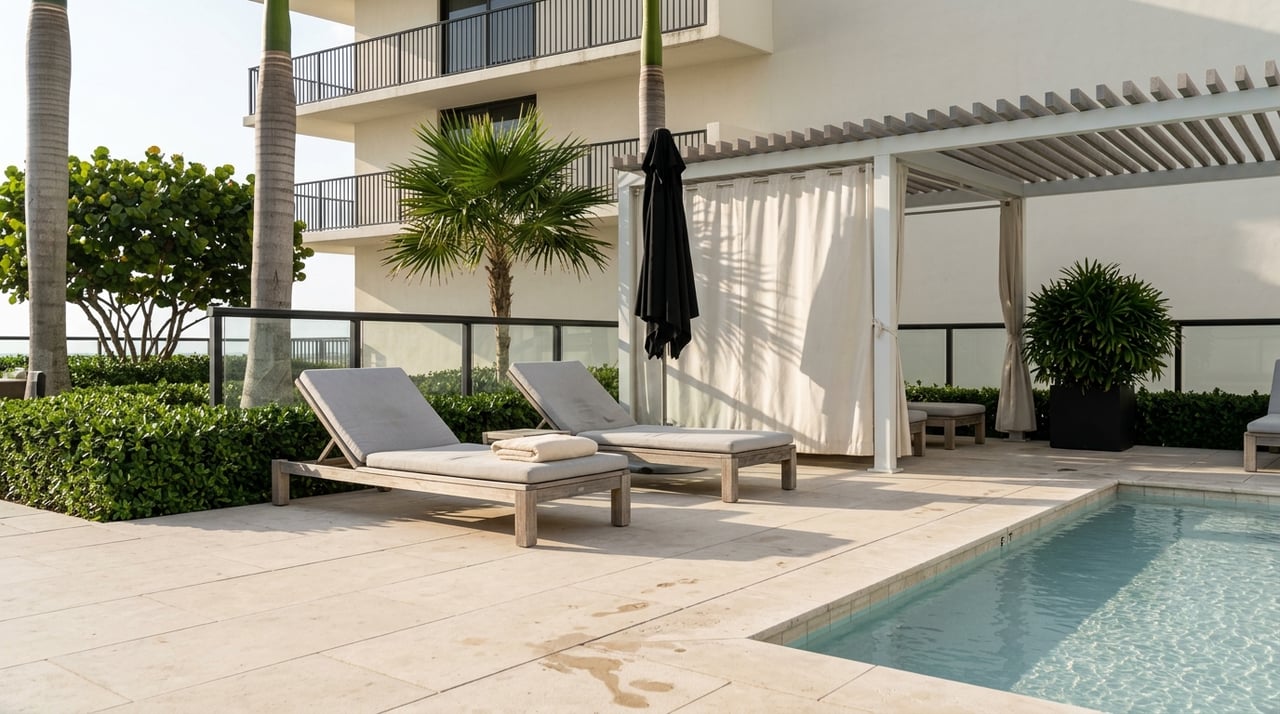
Official building sites help show that range. Arte Surfside highlights features like private terraces, ocean views, concierge service, indoor and outdoor pools, fitness and yoga space, sauna, steam room, a children’s room, a residents’ lounge, a pet corridor, and a rooftop tennis court. Fendi Château describes 58 flow-through residences, 300 linear feet of beach, assigned underground parking, and luxury service. Four Seasons at The Surf Club emphasizes an oceanfront spa and wellness center, pools, cabanas, valet, house car service, and 24-hour concierge.
Amenities Vary More Than You Think
Those examples show why it helps to compare buildings carefully. Two Surfside oceanfront condos may both offer beach access, yet your day-to-day experience can differ based on staffing, service level, common-area design, and how actively the property is maintained.
That difference also affects your budget. A building with a deeper amenity package and more service personnel may come with a very different monthly cost structure than a more streamlined property.
Lifestyle and Cost Go Together
It is easy to focus on finishes, views, and lobby design during your search. In Surfside, though, the smarter approach is to pair lifestyle preferences with a close review of operating costs and building governance.
A beautiful building may still be the wrong fit if the monthly dues, reserve schedule, or future capital needs do not align with your comfort level. The goal is not just to buy the right unit. It is to choose the right building.
Why Building Stewardship Matters
Oceanfront condo ownership in Surfside should be viewed as long-term building stewardship. Salt air, coastal exposure, and the realities of aging structures make inspection cycles and reserve planning especially important.
Florida requires milestone inspections for condominium and cooperative buildings that are three habitable stories or more. The first inspection is due by the year the building turns 30, and then every 10 years after that. In Miami-Dade, coastal buildings are subject to recertification at 25 years and every 10 years thereafter, with owners receiving notice and generally having 90 days to submit the required report.
Older Buildings May Face Multiple Review Cycles
In Surfside, some older towers may be dealing with more than one inspection framework at the same time. That makes it important to understand where a building stands in its inspection timeline, whether reports have already been completed, and what follow-up work may still be pending.
This is not just an administrative detail. Inspection timing can influence future repair planning, association decisions, and ownership costs.
Reserve Studies Are a Major Piece of the Puzzle
Florida’s structural integrity reserve study rules also matter. For residential condos with three or more stories, the study must be completed at least every 10 years and must cover core items such as the roof, structure, fireproofing and fire protection systems, plumbing, electrical systems, waterproofing and exterior painting, windows and exterior doors, plus other threshold items that negatively affect those components.
For budgets adopted on or after December 31, 2024, associations subject to these rules generally cannot simply waive or underfund reserves for those core items. For you as a buyer, that means reserve funding is not a side issue. It is one of the clearest indicators of how a building is planning for its future.
What Buyers Should Review Before Buying
In Surfside, condo documents are not just paperwork to skim at the end. They are one of your best tools for understanding risk, costs, and how the property is managed.
Florida law requires associations to maintain official records such as the declaration, bylaws, budgets, audits, structural integrity reserve studies, inspection reports, contracts, and building permits. Associations must also keep those records organized for owner inspection.
Key Documents to Request
As a prospective purchaser, you are entitled to current copies of important association materials, including:
- The declaration
- Articles and bylaws
- Rules and regulations
- Annual financial statements
- The latest milestone inspection summary, if applicable
- The most recent structural integrity reserve study, or a statement that none has been completed
- The turnover inspection report, if applicable
- The association FAQ document
A careful review of these documents can tell you far more than a unit tour alone. You may learn how the association budgets, whether major repairs are underway, and how well prepared the building appears for future obligations.
Look Beyond the Monthly HOA Number
The current monthly fee is important, but it does not tell the whole story. In many Surfside buildings, the bigger question is whether reserves are adequately funded and whether the association has a history of special assessments.
Florida law requires 14 days’ notice before a nonemergency special-assessment meeting. The law also allows reserve items to be funded through regular assessments, special assessments, loans, or lines of credit. In practical terms, that means your real cost of ownership may depend less on today’s dues and more on how the building handles long-term capital needs.
Understanding Ownership Costs in Surfside
A Surfside oceanfront condo usually carries more layers of cost than a typical single-family purchase. If you are planning your budget, it helps to look at the full picture from the start.
In addition to your mortgage, you may need to account for:
- HOA dues
- Property taxes
- Association or unit-owner insurance
- Flood insurance where required
- Possible special assessments
Miami-Dade County offers a Tax Estimator that can help you model property taxes. The county also states that Florida homeowners may qualify for up to a $50,000 Homestead Exemption on a primary residence, with an application deadline of March 1.
Insurance Has Two Sides
Condo insurance is divided between the association and the unit owner. Under Florida condo law, the association must maintain adequate property insurance for the association property and common elements, while the unit owner’s policy covers personal property and other items inside the unit boundaries.
The usual unit-owner policy form is HO-6. Flood insurance is separate, and homes in high-risk flood areas with mortgages from government-backed lenders are required to carry it.
Flood Risk Is Address Specific
Because Surfside is an Atlantic barrier-island community, flood risk should be reviewed by exact address. It is not safe to assume that every building has the same flood profile or that every lender requirement will be identical.
That is one reason a disciplined review process matters. Clear due diligence can help you understand not just what you are buying, but what it may cost to own over time.
A Local Sign of Recertification Costs
Surfside has also responded locally to recertification pressure. The town launched a 2026 Building Recertification Permit Fee Assistance Grant Program that reimburses eligible condominium associations for municipal recertification permit fees only, up to $200,000 per building.
The grant does not cover engineering, construction, repair, legal, or fine costs, and the association, not the individual owner, applies for it. Even so, it is a useful signal for buyers. It shows that recertification-related expenses can be substantial enough to warrant municipal support.
How to Buy More Confidently in Surfside
If you are considering an oceanfront condo in Surfside, it helps to approach the search with both lifestyle and risk in mind. The right purchase is usually the one that balances your enjoyment of the property with a realistic view of future obligations.
A smart review process often includes:
- Comparing amenity packages against monthly carrying costs
- Reviewing inspection timelines and recertification status
- Reading reserve studies and annual financials carefully
- Looking at assessment history, if available
- Clarifying what the association insures versus what you insure
- Reviewing flood considerations by specific address
In a market like Surfside, calm and careful analysis matters. The most attractive oceanfront condo is not always the one with the flashiest presentation. Often, it is the building that fits your lifestyle while showing strong planning, clear documentation, and a cost structure you can carry with confidence.
If you want experienced, discreet guidance as you evaluate Surfside condos or other South Florida waterfront opportunities, LA GORCE REALTY can help you move forward with clarity.
FAQs
What makes Surfside oceanfront condo living different from other coastal areas?
- Surfside offers a compact, pedestrian-friendly oceanfront setting, but condo living here is shaped heavily by each building’s amenities, governance, maintenance program, and monthly cost structure.
What documents should you review before buying a Surfside condo?
- You should review association documents such as the declaration, bylaws, rules, annual financials, milestone inspection summary if applicable, structural integrity reserve study, turnover inspection report if applicable, and the association FAQ document.
Why do reserve studies matter for Surfside condo buyers?
- Reserve studies help show how a building is planning for major components like the roof, structure, plumbing, electrical systems, waterproofing, and windows, which can directly affect future costs and assessment risk.
How do special assessments affect Surfside oceanfront condo ownership?
- Special assessments can increase your actual cost of ownership beyond monthly HOA dues because associations may use them to fund reserve items, repairs, or other capital needs.
What insurance should you expect with a Surfside oceanfront condo?
- The association generally insures common elements and association property, while you typically need a unit-owner policy for personal property and interior items within the unit boundaries, with separate flood insurance required in some cases.
How can you estimate property taxes for a Surfside condo purchase?
- Miami-Dade County provides a Tax Estimator, and if the condo will be your primary residence, you may qualify for up to a $50,000 Homestead Exemption if you meet the requirements and apply by March 1.